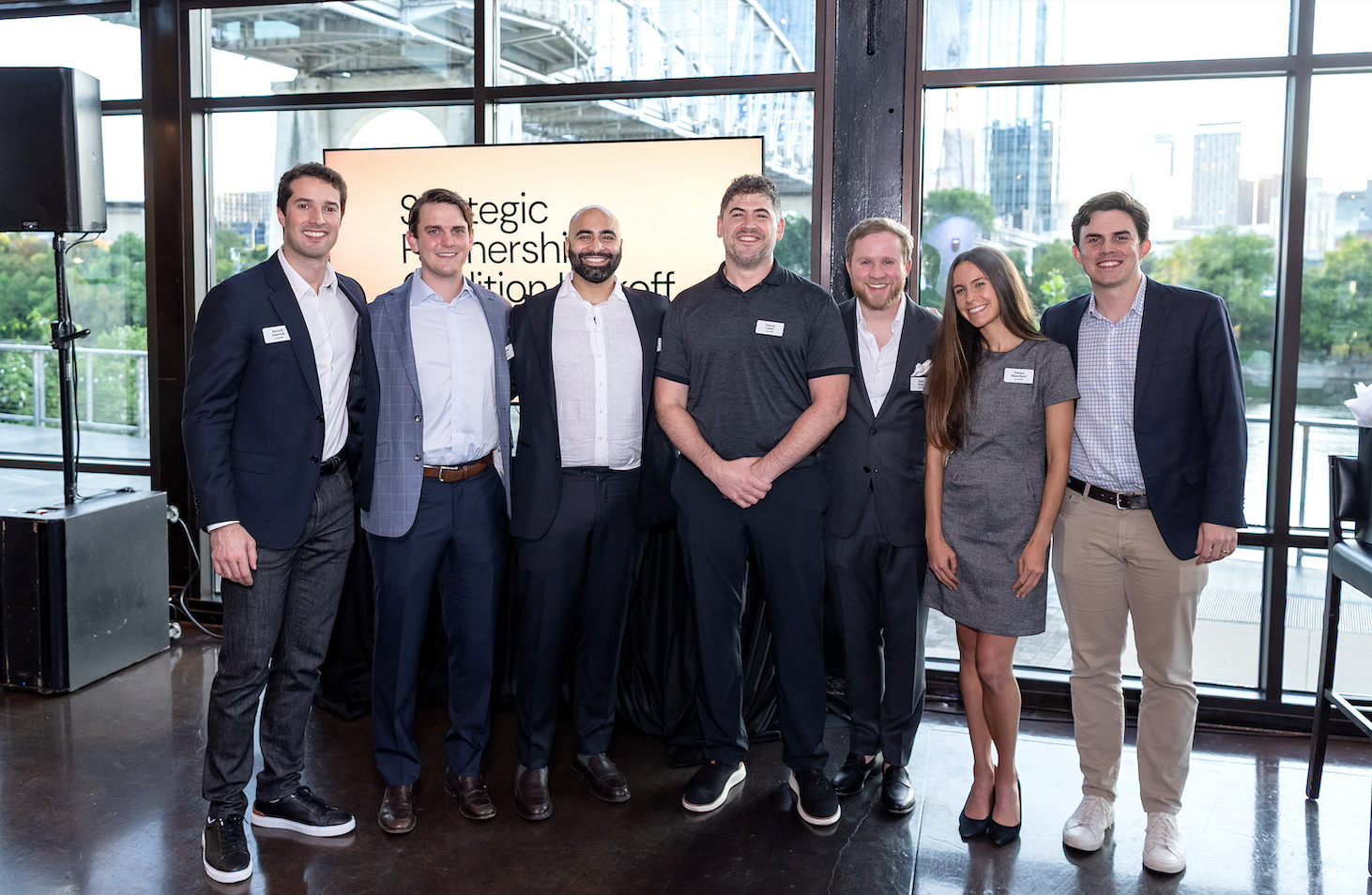
25m Health hosted a virtual workshop teaching enterprise healthcare operators more sophisticated ways they could leverage agents for critical operational workflows.
My main reflection is that the opportunity is bigger than “use AI to save a few hours a week.” The more interesting shift is that operators can now take a messy workflow, make it explicit, and turn it into usable work product much faster than before. That changes how teams should research, design, evaluate, and improve operational work. Below are a few of the key lessons we took away:
1. The biggest unlock is not better prompting. It is better context building.
Most teams still use LLMs at the table-stakes layer: summarize this, rewrite that, draft an email. Useful, but limited.
The real unlock is when operators build context: reference docs, workflows, SOPs, constraints, examples, and desired outputs. That is when the model stops acting like smarter Google and starts producing work that is actually grounded in how your organization operates.
2. The right unit of work is the workflow, not the tool.
We used voice outreach as the example, but the point was not that every health system needs a voice agent.
The point was that voice agent vendor selection forced operational specificity: channel selection, identity verification, escalation, extraction, EHR write-back, safety, and security. Once you can make one workflow explicit at that level, the same approach transfers to benefits verification, scheduling, intake, RCM, and documentation support.
It is critical that operators start somewhere vs. delegating these activities to vendors as it builds muscle on agent strategy, evaluation, implementation, and success.
3. Agents are most useful when they turn ambiguity into artifacts.
The most practical part of the workshop was the sequence.
Start with market research. Then define the feature set. Build the risk matrix. Map the workflow. Generate a prototype. Create sample scripts. Draft the RFP. Build the scoring rubric.
That is a much better way to run build-vs-buy than starting with vendor demos and vague requirements. Agents reduce the cost of getting specific.
4. Healthcare operators should prototype before they procure.
A lot of enterprises still evaluate AI vendors before they have fully defined the workflow.
That is backwards.
The better approach is to use agents to clarify the workflow first, pressure-test the edge cases, define what is mandatory, and then evaluate vendors against that spec. The RFP and rubric become sharper because they are grounded in the actual job to be done, not generic vendor language.
5. The questions operators asked were a good signal of where the market is going.
What stood out in the discussion was where people’s curiosity went.
It was: how do we build context that is shared across teams? How do we collaborate inside projects? How do we make the model push back instead of just agreeing with us? Should a benefits verification agent run persistently, on a schedule, or on demand? How do we get from a compelling prototype to something that can actually live inside an enterprise healthcare stack with the right privacy, security, and data infrastructure?
Those are the right questions. They show operators are already moving past novelty use cases and toward redesigning work.
6. The real operator muscle is learning how to manage probabilistic systems.
These tools are not deterministic software. They need structure.
That means operators need to get comfortable with source-linking, confidence thresholds, “I don’t know” as a valid answer, human-review gates, latency tradeoffs, and clear rules for what should and should not write back into the system of record.
In healthcare, a lot of the value will come not from pretending the model is perfect, but from designing the guardrails well.
7. The durable advantage is operator adaptability.
Models will improve quickly. Specific tools will change. Interfaces will change.
The thing that compounds is operator fluency: knowing how to build context, test edge cases, choose the right model for the task, refine the workflow, and update how your team works as the tools improve.
That is the bigger cultural shift here.
The teams that benefit most from agents will not be the ones with the flashiest AI strategy deck. They will be the ones whose operators get hands-on, build this muscle early, and keep adapting as the models get better.
If you are an enterprise healthcare operator and would like to discuss a workflow, pressure-test a build vs. buy decision, or review vendors and prototype ideas please reach out to me at dhruv@25mhealth.com.